+91-22-40032869 / 35107562

Choosing the right storage boxes for kitchen essentials may seem like a simple decision, but in reality, it directly impacts kitchen organisation, food freshness, space utilisation, and daily efficiency. One of the most common queries users search on Google is “What size storage boxes should I buy for my kitchen?” - and for good reason.
From dry groceries to spices, snacks, leftovers, and bulk staples, every kitchen item demands a different storage approach. Selecting the wrong size can lead to cluttered cabinets, wasted space, stale food, and constant rearranging. This comprehensive guide answers real user questions, helps you make informed decisions, and ensures your kitchen remains organised, hygienic, and functional.

Many users assume all kitchen storage containers serve the same purpose. However, size selection plays a critical role in how effectively your kitchen functions.
Overfilled containers are causing spillage
Half-empty boxes are wasting shelf space
Difficulty stacking or fitting boxes into cabinets
Food is going stale due to excess air inside containers
Selecting the right size storage boxes for kitchen essentials solves these issues while enhancing visibility, accessibility, and cleanliness.
The best approach is to categorise your kitchen essentials first. Each category has different storage requirements.
Dry groceries (rice, wheat, flour)
Pulses and grains
Snacks
Spices and condiments
Leftovers and cooked food
Baking ingredients
Once categorised, you can choose storage boxes that match usage frequency, quantity, and available space.
User Query: “What size storage box is best for rice or flour?”
Dry staples are usually bought in bulk and require large-capacity storage boxes for kitchen use.
5–10 litres for families purchasing in bulk
2–4 litres for smaller households or secondary storage
Choose airtight containers to prevent moisture and pests
Rectangular or square boxes maximise cabinet space
Transparent bodies help track refill levels easily
Using oversized boxes for small quantities can trap excess air, affecting the freshness-size balance is essential.
User Query: “Should I store pulses in separate containers?”
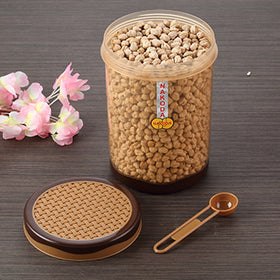
Yes. Pulses should always be stored separately to maintain freshness and avoid mixing.
1–2 litres for lentils used frequently
3–4 litres for bulk pulses
Smaller, uniform-sized storage boxes for kitchen shelves allow better stacking and easier access.
Choosing the Right Size Storage Boxes for Spices
User Query: “What size containers are best for spices?”
Spices need compact containers to maintain aroma and freshness.
100–250 ml for daily-use spices
300–500 ml for whole spices or frequently refilled items
Avoid large containers for spices-it introduces excess air and reduces shelf life.
Stackable, small storage boxes for kitchen spice racks help save space and maintain order.
User Query: “What size container should I use for snacks?”
Snack storage depends on consumption habits.
1–2 litres for biscuits, chips, and namkeen
500 ml–1 litre for dry fruits and seeds
Choose transparent, airtight storage boxes for kitchen countertops to quickly identify contents without opening lids.
User Query: “Can I use the same storage boxes for cooked food?”
Yes-but size selection is crucial.
500 ml–1 litre for individual portions
1–2 litres for family meals
Ensure the storage boxes are food-grade and suitable for refrigeration. Over-sized containers can dry out food faster due to trapped air.
User Query: “What size container is best for baking ingredients?”
Baking ingredients require precise measurement and organised storage.
1–2 litres for flour and sugar
250–500 ml for cocoa powder, baking soda, or chocolate chips
Using properly sized storage boxes for kitchen baking supplies ensures easy access and accurate usage.

User Query: “How do I ensure storage boxes fit in my kitchen cabinets?”
Before purchasing:
Measure shelf height, depth, and width
Check door clearance for taller containers
Choose modular, stackable designs
Matching container size with cabinet dimensions avoids overcrowding and improves accessibility.
User Query: “Should I buy stackable storage boxes?”
Stackable storage boxes for kitchen organisation are ideal for small spaces.
Efficient vertical storage
Uniform sizing improves aesthetics
Easy to rearrange
However, avoid overly tall stacks that make lower containers difficult to access.
User Query: “Does size affect airtight storage?”
Yes. Airtight containers work best when the box size closely matches the quantity stored.
Too large → excess air → food spoils faster
Too small → difficult refilling
Choosing the right-sized storage boxes for kitchen use ensures longer shelf life and reduced food waste.
Based on kitchen organisation best practices:
Buy mixed-size sets instead of identical containers
Prioritise frequently used items for easy-access sizes
Avoid overbuying large containers
Opt for transparent storage boxes for visibility
Label containers to maintain organisation
These practices align with professional kitchen organisation standards and user behaviour insights.

Buying only large containers
Ignoring cabinet dimensions
Choosing sizes without categorising items
Overlooking refill frequency
Using non-food-grade materials
Avoiding these mistakes ensures long-term satisfaction and usability.
Selecting the right size storage boxes for kitchen essentials is not about aesthetics alone-it’s about functionality, freshness, hygiene, and convenience. By understanding your storage needs, categorising items properly, and matching container sizes to usage patterns, you can transform your kitchen into a well-organised, efficient space.